SHEARS interview
It’ll be loud, big, bassy, synthy goodness.

While I’ve no talent for it myself, I’ve long understood how instruments create music. Don’t ask me to make anything tuneful with guitars, pianos or drums, but I get them. Dance music—and production—goes right over my head.
That’s why I have extra admiration for artists who make music I love in this area. Anyone who’s read my work in recent years (not even my mum—she finds my later work derivative and cynical) will know I’ve got a huge amount of time for SHEARS. Songwriter, musician, producer—she does the lot and does it well. I’m delighted to say we had a catch-up ahead of the release of her debut album, WE ARE BUT CHEMICALS.
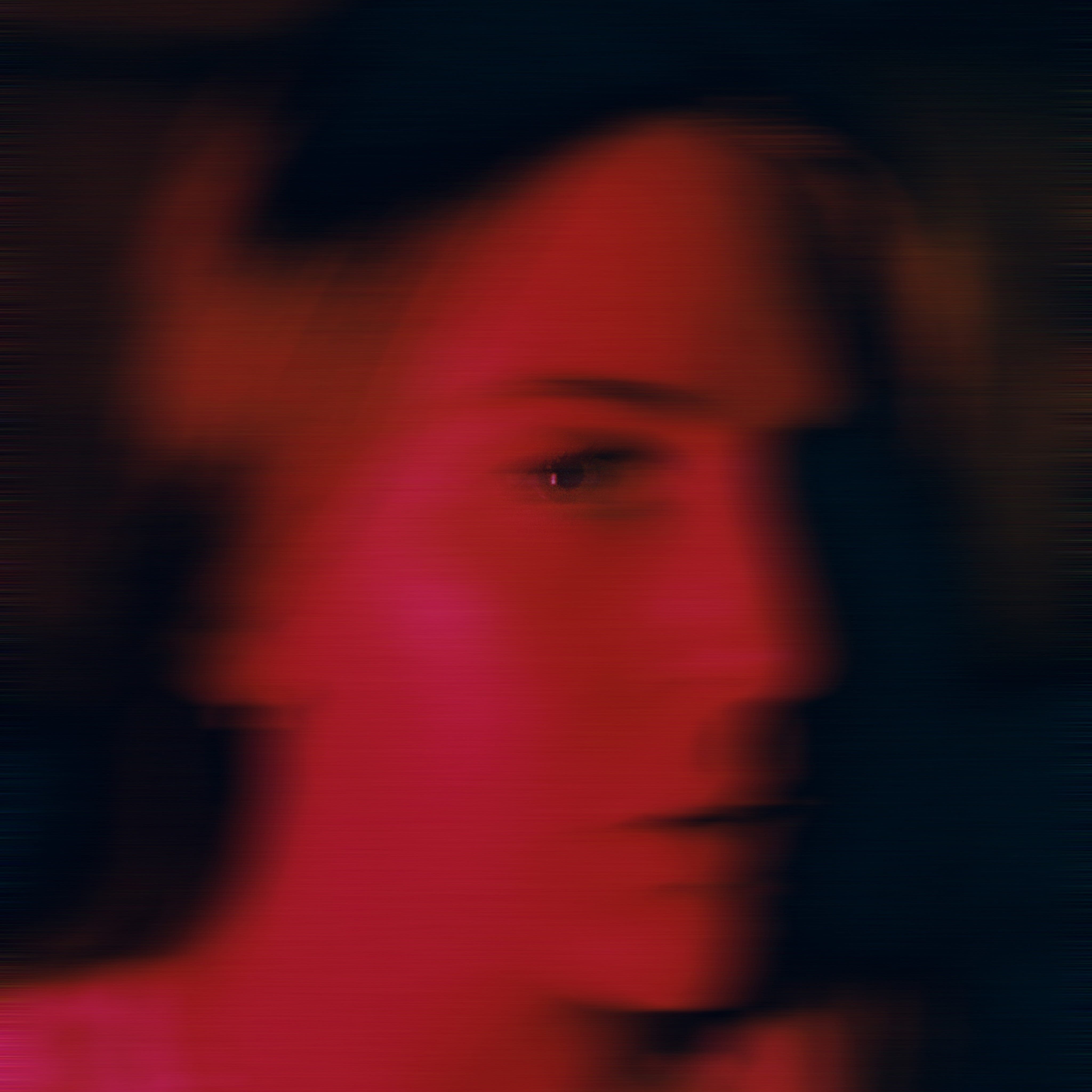
You’re on the brink of releasing your debut album and you’ve got big shows in Edinburgh and Glasgow soon. How are you feeling?
I’m feeling good. It feels like this should have happened a while ago, but it also feels like the right time. I’ve been working towards it for a long time. It’s a little daunting, but I feel good about it. I’m ready.
The first half of the album contains the recent singles, so people who know you will be able to work their way in. The second half comes in fresh, and I think it’s a bit more upbeat for listeners. Was there a deliberate plan to the sequencing?
It was sequenced once it was finished. I just wrote what I felt like I needed to write, and it split into two halves on its own without me needing to do very much.
The first half mainly covers my past and situations I’ve had to learn and grow from. It’s more negative topics—hypocrisy, contradiction—but made dancey. The second half is more about finding joy with your friends, learning what makes you happy. It’s more upbeat lyrically. So, it just ended up being four of these and four of those. I thought, 'Oh, look what I’ve done—that’s how I was feeling.'
And of course, there’s a limited edition vinyl run, so that makes it your classic 'album side one/side two.'
Exactly. If you’re feeling upbeat, go for the second side. Flip to whatever your mood is. That was my intention all along. I’m really excited—it’s the first vinyl I’ve ever done, and it’s red, which is fun. I went to see it being pressed at Seabass Vinyl. They’re so lovely there, and it was a particularly sunny day, so the whole run was made using solar power. That was also lovely—great for the climate.
So, it’s a red and a green album?
It’s a red and a green album. You’ve got it—that’s what I need to start saying. It’s really nice to have something physical to hold.
Have you got a copy yet, or are you still waiting?
I’ve got a bunch of vinyl stacked in my hallway at the moment!
You see the first one, it’s a joy, then you realise you’re going to be tripping over them for weeks until they’re sent out.
Totally, yes. But it was lovely at Seabass—they gave me the first one, and I could put it straight on the record player and blast it as loud as I wanted. I’d never done that before. It was a really sweet moment.
You’ve written, produced, mixed, and performed solo. Is total control liberating for you, or does it sometimes feel like too much weight on your shoulders?
I felt like I had something to prove before. When I was making everything, I needed to make sure everyone knew I was doing it myself, and I took on a lot. I feel like that’s lifting a little bit. I still want to make everything myself, but I can delegate a bit more without feeling… I feel like I’ve proven myself—gotten to the album stage by doing it myself. Now I can delegate. Now I can be like, 'Can I have some help with this?'
Because it’s so much work, and nobody told me how much admin was involved with making an album. It’s ridiculous—there’s so much to do.
New musicians need to know they’ll be knee-deep in Excel and note-taking!
So, so much of that. I’m not a spreadsheet girl, but I feel like I can let some of that go now, which is nice.
Turning to songs on the album, 'BONES’ tackles women’s health and birth control—topics rarely given mainstream pop space. Was there any hesitation about making something so private so public?
Not really. I wrote 'BONES’ in about 2020, so it’s relatively older compared to the new ones. I found it on my laptop, really liked it, and thought how it was unfortunately all still relevant. The demo was just piano and vocal, and I wanted to make it an epic kind of song—change the production, build it up, do something with it. I didn’t think too much about being asked about hormonal birth control. Most women have had to deal with it, and I haven’t heard most women enjoying taking it, so it feels like a useful topic.
When I’ve played it live, usually the women in the crowd cheer in solidarity.
By contrast, ‘LOOKING AT THE FLOOR IN THE DARK’ is made for the dance floor. Was it deliberate to go out in such a big way—end on a high?
No, it wasn’t deliberate, because there wasn’t an order until they were done. With that one I challenged myself to make something with one note going all the way through—the synth going 'ba-ba-ba-ba-ba'. I wanted to keep it going and see if I could build a song around it. I needed something to push me forward that day.
It kept building and building. Then I thought, 'I need an outro,' and it ended up as this dancey track that built to the end of the album, which was really nice. But it didn’t have a place at the end until the very end, when they were all sat there.
Do you set yourself challenges a lot—to break monotony or get past writer’s block?
Sometimes. I’ll listen to someone else’s music and hear an element—like the one-note idea. I think I’d been listening to an old David Guetta song and noticed one note going through. I thought, 'That’s interesting—what if I start there and see where I can take it?' Other times I’ll just sit and write. It depends how I’m feeling.
Earlier in the year, some idiot called ‘ARCADE MACHINE’ the song of the summer. Do you feel the album has any songs for winter or autumn?
Was that you who called it the song of the summer?
It was. To caveat that, I said that before ‘Manchild’ was released, so I might have to step down on that, but around April/May you were the front runner.
That’s great. I mean, I can’t fight Sabrina—she’s a legend. Songs for winter… I don’t know, they all have their place. ‘Feel It’ isn’t necessarily summery—it’s sharper, pulsing. If you’re feeling emotional, ‘Bones’ could be in there. What would you think of as a winter song?
Unfortunately it drifts into Christmas songs. Maybe autumn—when it gets colder I listen to bands like Low and Wilco, big guitars and emotions in that season.
That’s fair. I’ll throw ‘Feel It’ in as a sound of autumn.
You’re part of the Hen Hoose collective. I know the artists involved talk about how supportive it feels, but has it impacted how you write or what you think you can achieve?
100%. We went to Black Bay Studio in May, on the Isle of Lewis, and wrote an entire album in six days—wrote and recorded it. It was pretty much finished in three days; the rest was overdubs and live instruments. Working with so many accomplished musicians and seeing how they work changed how I think.
Someone would say, 'Let’s add this strange noise,' and at some point somebody was hitting a water bottle. It made me feel less constrained. I restrict myself sometimes with the noises I use, and they were just going for it. Now I think, 'I can add any noise I want without overthinking.'
Hen Hoose changed everything for me because they trusted me. It wasn’t, 'Can you mix this?' It was, 'When can you mix this?' I’d say, 'Are you sure? Do you want to check I can do it first?' and they’d say, 'Nah, just do it.' That trust built my confidence in a way it wouldn’t be otherwise.
Also, the sense of community helps. Being a woman in the music industry can be frustrating at times, so having a group in the same boat—everyone doing well—means I don’t think about it as much.
Would you recommend it to others who could fit into Hen Hoose?
Definitely. You’re part of Hen Hoose if you join the FLOCK sessions—there are production, mixing and DJ workshops. I think they’ve helped up to 700 people since they started. Tamara (Schlesinger) has put in so much time and effort. It’s amazing to be part of the core so I can benefit and also help.
You talked about the freedom to make noises—and you’ll be making noises in your live show. How are you planning the live set compared to the studio/home studio work?
Nice segue! Yeah, the live show is completely different from the studio. There’ll be live synths, effects, percussion, vocals—all of it. I make a song and then go, 'What can I do with this live?' Usually I play by myself, but I’ve enlisted help for the album shows, so the sounds will be bigger than ever.
I also have a really tall spiral cymbal—it’s a lovely conversation starter, it looks really strange. That’ll be joining me, and Susan Bear will be joining me as well. She’ll play her own set—she’s an amazing producer and performer—so I’m really looking forward to that. It’ll be loud, big, bassy, synthy goodness.
So even if someone saw you before, this will be a different type of show.
Yes—a bit different. More live elements than normal because there’ll be more than just me out there. I’m really looking forward to them—they’ll be quite special.
I can imagine at this point everything is building to the album release and shows. Will you give yourself time to enjoy it, or are you the sort of person who kicks on to the next thing straight away?
I want to give myself time to enjoy it. I was speaking to Carla J. Easton recently and she said, 'There’s only one debut album—you have to love it, you have to enjoy the experience.' And I just thought, 'Oh yes, there is only one.' I’d forgotten.
So I’m trying to do that, trying to enjoy it. I won’t lie—I have been tinkering with some new music, just because I love doing that. But yes, I’m definitely trying not to put too much pressure on myself. Just let it be what it will be. I’m very proud I’ve made something and it’s going out.
I’m still trying to picture Carla J. Easton telling anyone to take it easy.
She’s a character, but I love her. She’s brilliant. She’s been giving me advice like a big sister—she’s five albums in, so she knows. She WhatsApps me about stuff next year and I’m like, 'Are you going to have time? Aren’t you doing a PhD?'
You often talk about people like this and you can say they wrote the book, with Carla, she made the film!
She’s made a film, doing a PhD, and still finding time to message me. She’s great.
A couple of quicker ones. Is it possible to sum up the album in one sentence?
What we feel is only chemistry, and chemistry can change.
Nice.
Yeah, it’s a flow. It flows between not knowing what you’re doing and feeling happier with your situation. The first half is the confusion; the second half is the happiness.
Is there a pop song you wish you’d written?
‘I Feel Love’ by Donna Summer. I put it on in my studio and it just sounded so epic. I thought, 'I want to make something like that.'
One of my friends came into my studio, sat down, and I put it on. Ten minutes later they were just sitting there going, 'I like this.' That’s the reaction I want to give people.
What was the first album you bought with your own money?
I don’t know if it was my own money, I was very young, but it was either Five or Britney Spears. One of those.
Classic pop either way. What’s your ‘ANTIDOTE’ to a bad day?
Some good food, being cosy. If you’ve got an animal, get your animal, get a blanket, watch a movie—sorted. Or, if you’ve had a really bad day, some meditation might help. A bath. A run, depending on what kind of person you are. For me, if I’ve had a bad day, a quick 10-minute meditation—some breathing—then sit on the sofa, grab my cat, watch a movie, and I’m good.
SHEARS releases WE ARE BUT CHEMICALS on 10 October.
SHEARS plays Edinburgh on 4 October and Glasgow’s Hug & Pint on 26 November.